
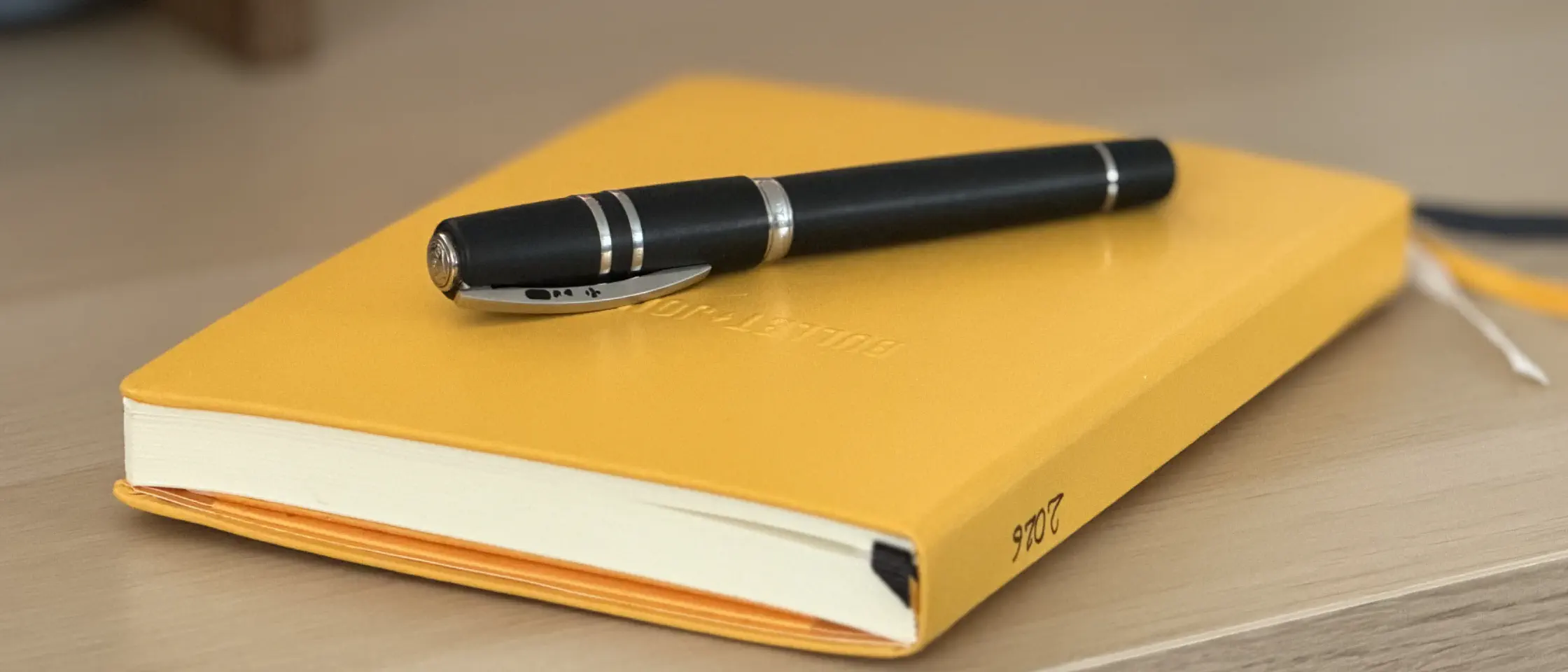
Fifteen years of ink and paper—Why do I still use a fountain pen alongside Obsidian?
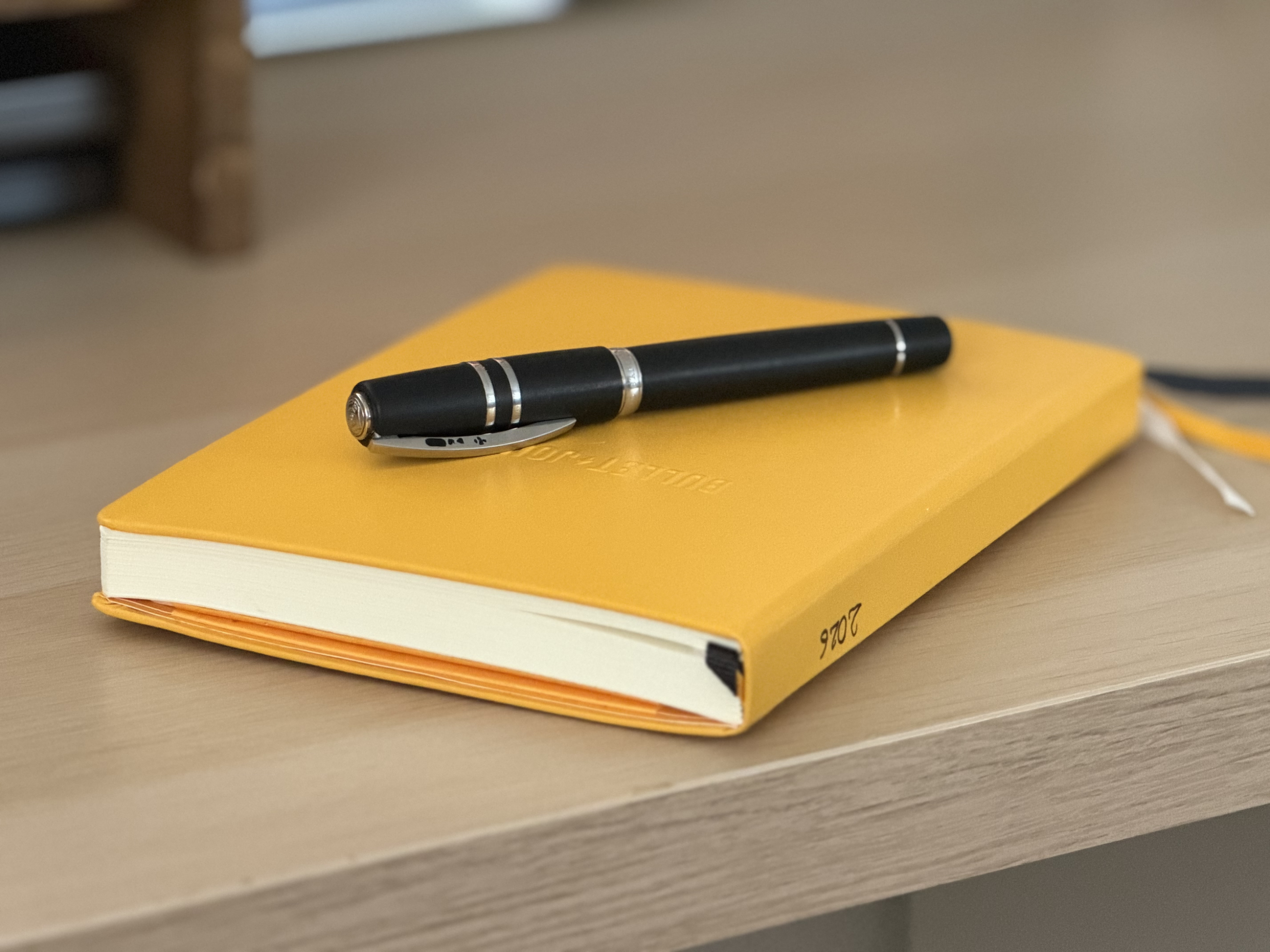
For about 15 years, a fountain pen and a paper notebook have been my main tools for handwritten notes. In 2013, I bought myself a fountain pen for a birthday. It has followed me everywhere since.
I spend plenty of time with digital tools. Obsidian is where I organize and connect my notes. But when I sit down in a meeting or have a conversation worth remembering, I usually reach for my notebook and pen case.
I enjoy writing by hand. And I enjoy coming back to those pages when it is time to turn them into something more structured.
A pen that has followed me since 2013
The Visconti Homo Sapiens was a birthday present to myself. I chose it because it’s a large pen, and it fits my hand well.
That matters when you use a pen every day. An object can look beautiful and still feel wrong when you hold it. This one felt right. Its size was part of the appeal, and that comfort has kept it in my daily routine for more than a decade.
Since buying it in 2013, I have taken it everywhere. Outside my digital notes, I write with fountain pens every day. It has become the constant in that routine, alongside a few other pens that let me bring different colors to the page.
There is something satisfying about using the same object for years. I know how it feels in my hand. I do not have to think about whether it is the right tool each time I open my notebook.
I pick it up and write.
The pleasure of choosing my ink
One of the pleasures of a fountain pen is choosing the ink. The pen stays familiar, while the color on the page can change with your preferences.
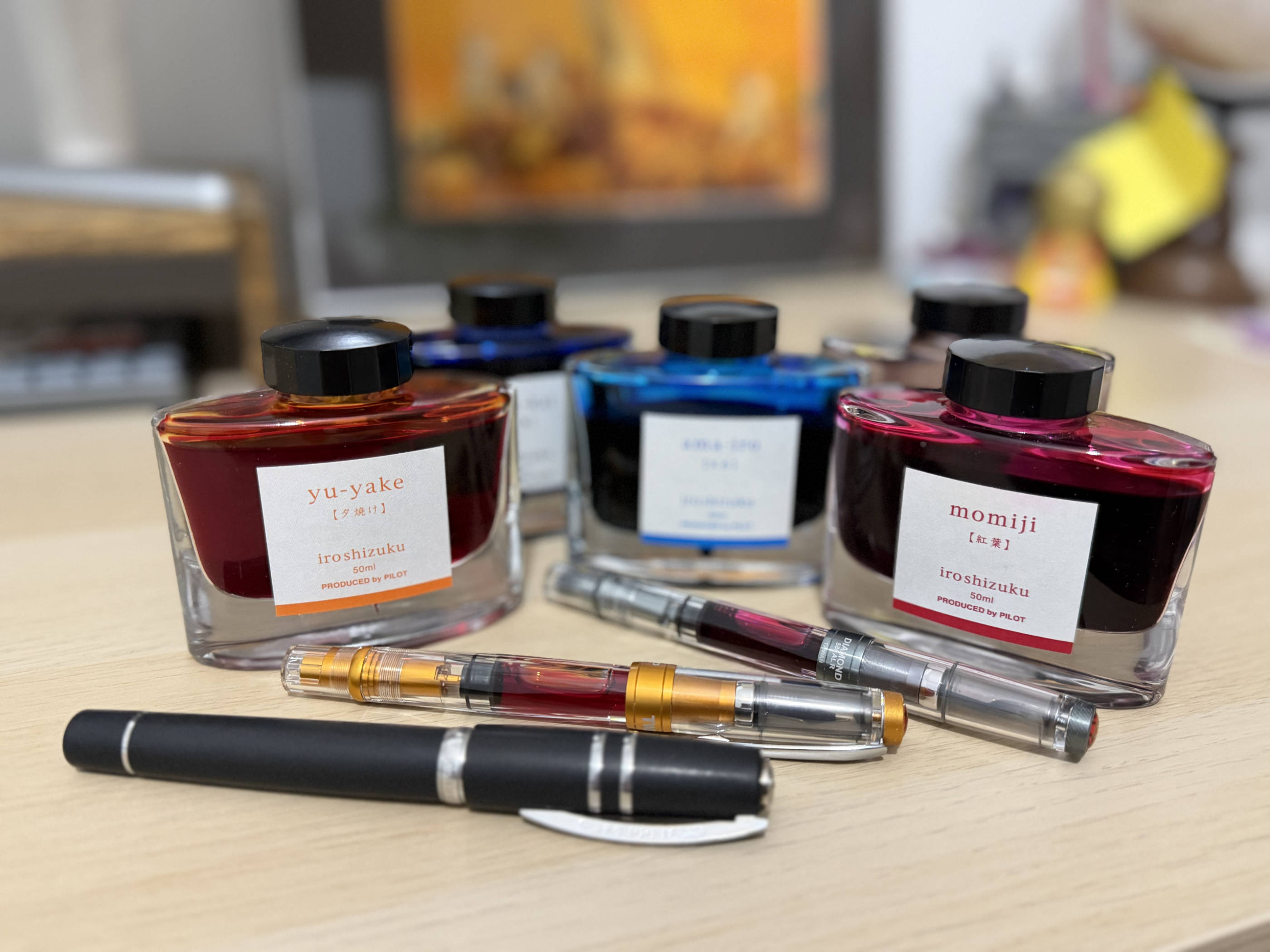
I use Pilot’s Iroshizuku inks. My everyday ink is Shin-kai. For a long time, I used Kiri-same, but eventually I wanted to return to a more blue-toned ink. Shin-kai became my daily choice.
I also keep other fountain pens inked with Momiji, a red; Yu-yake, an orange; and Ama-iro, a blue. They bring variety to my notes and let me add color when I feel like it.
I enjoy having that choice. A page of notes is something I will read again, but it is also something I spend time making. The ink is part of that experience.
The pleasure of writing deserves a place in the way I choose my tools. I want to enjoy the gesture as well as the result.
The notebook I found by chance—and kept using
My relationship with Leuchtturm1917 started with a chance purchase. I bought one of their notebooks, liked it, and kept coming back.
For roughly 15 years, I have used their notebooks almost exclusively. The first purchase was accidental; the ones that followed were a choice.
Today, I use their Bullet Journal notebooks because they have 120 g/m² paper. That paper is the reason I choose this version.
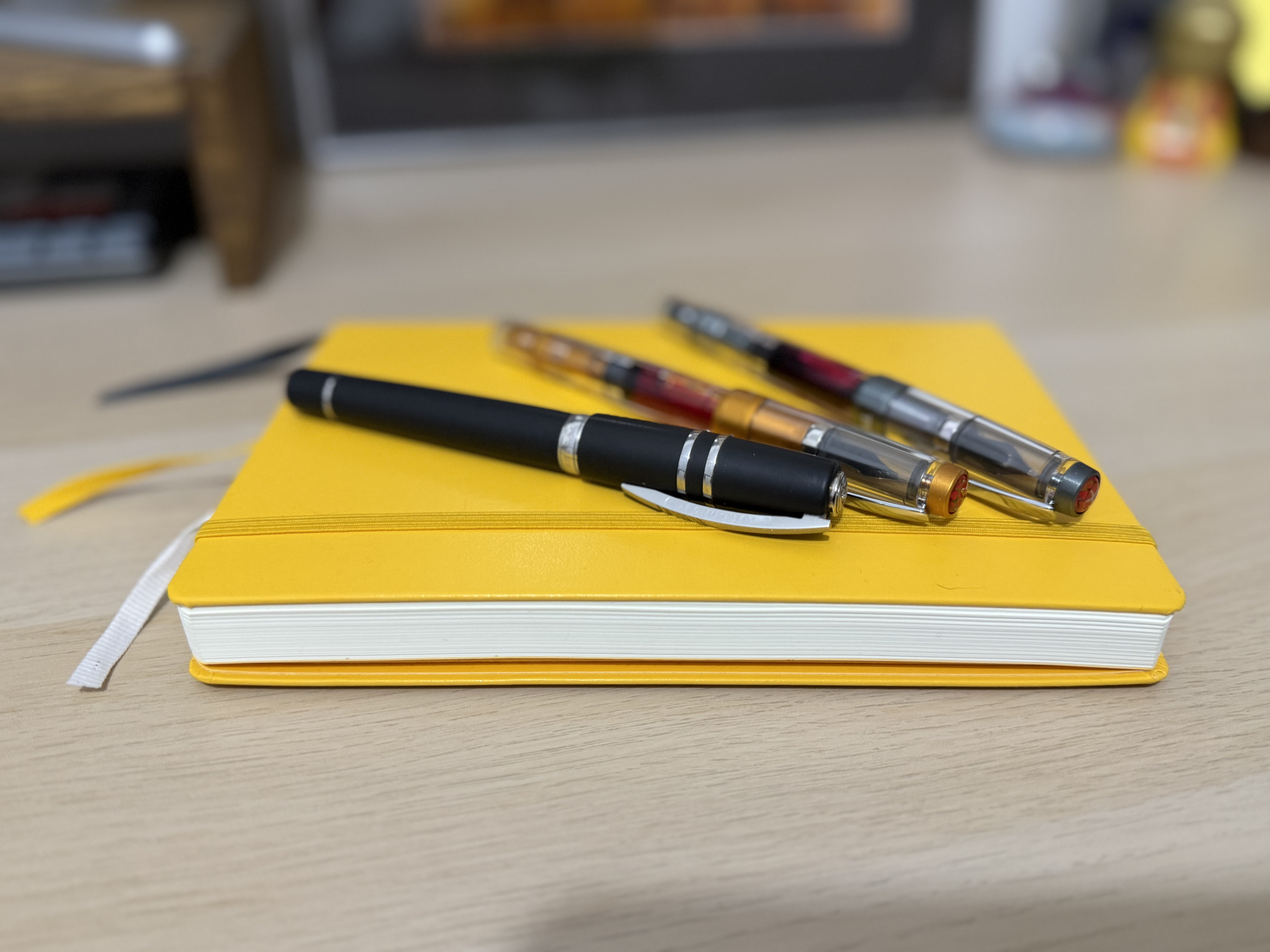
With a fountain pen, the notebook is part of the writing experience. I choose an ink, put the nib to the page, and use that combination throughout the day. Finding a notebook I like means I can keep enjoying that routine without reconsidering the paper every time I need a new one.
The notebooks change as I fill them. The habit stays familiar.
Why I reach for paper in meetings
My notebook and pen case go everywhere with me. In meetings and conversations, I prefer them to digital tools.
In these times of AI note-taking, that is a personal preference, built through years of use. Writing with a fountain pen feels natural to me, and the notebook has become the place where I first capture those exchanges.
I already have a digital system I value. Keeping a paper notebook alongside it gives me another way to work, one that I enjoy using while a conversation is happening.
The handwritten page is my first record. It can stay close to the discussion as it unfolds. Later, I can return to it with a different purpose: understanding what I want to keep.
From handwritten notes to Obsidian
The next step is the synthesis in Obsidian.
This is where the handwritten notes become particularly useful to me. I return to the page, reread it, and work through it again. I can reformulate an idea, clarify a point, or bring related elements together before adding the summary to my vault.
That second pass gives me another opportunity to think about what I wrote. The conversation has finished. I can look at the note as a whole and decide what matters.
I have written before about turning notes into actionable steps. Reviewing the note is an important part of that process. My paper notebook gives me the material; the synthesis is where I work on it further.
Paper and Obsidian fit together well in this routine. I enjoy capturing notes by hand, then using my digital system to organize the result and connect it with what I already know.
A routine I still enjoy
For me, the time spent making that summary is useful. It is a chance to rework the note, and I am happy to make room for it.
You do not need my pen, my ink, or my notebook to work this way. Those are choices shaped by what I like holding, writing with, and seeing on the page. Someone else may feel more comfortable typing directly into their notes app.
After about 15 years, I still enjoy opening a Leuchtturm1917 notebook and writing with my fountain pens. That is what keeps this routine going: pleasure in the writing, followed by time to think through what I have written.
Do you still make room for handwritten notes in your digital workflow?